55% OFF + 2 FREE ACCOUNTS
Limited Time
Code:
GUNTER

Learn where to place stop loss effectively to protect your trades, minimize risk, and improve consistency in every market move.
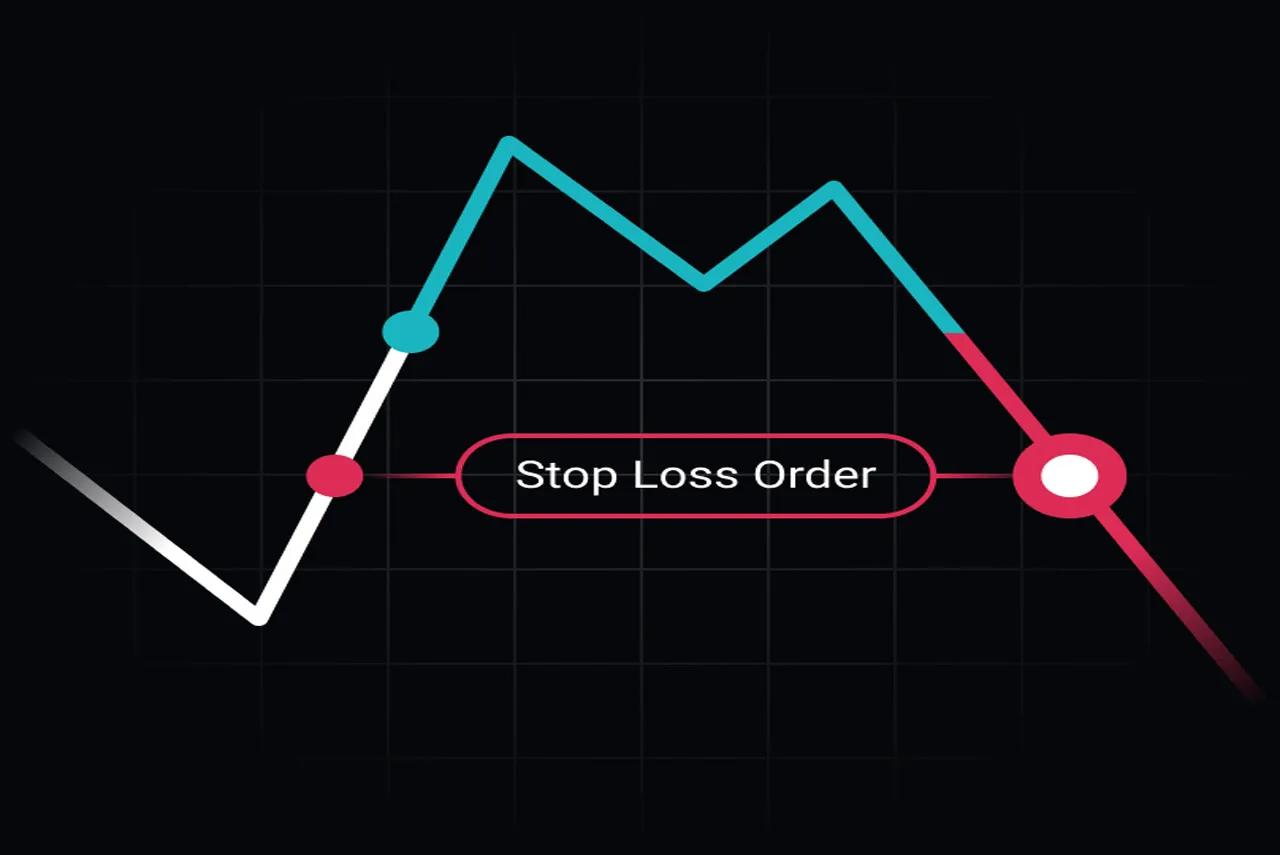
When Day Trading Indices, a single misplaced stop loss can turn a slight edge into a costly mistake; the placement of your stop affects position sizing, risk-to-reward, and whether you survive volatile moves or fall prey to stop hunts.
This guide breaks down stop-loss placement using chart structure, support and resistance, volatility measures like ATR, trailing stops, and break-even techniques, so you can trade more consistently and work toward professional trading with a funded account.
To help you get there, AquaFunded's Funded Trading Program pairs clear risk rules with access to funded capital, giving disciplined traders an absolute path to trade like a pro and grow undercapitalized without extra jargon.

A stop loss is an instruction you give your broker to automatically exit a position once the price reaches a preset level, thereby protecting you from larger, emotion-driven losses. It does the watching for you, turning a reactive decision into a mechanical rule so you can trade with discipline and predictable risk.
A stop-loss order tells the market to sell your position when the price reaches a trigger you set, converting that trigger into an exit without you having to click at the worst moment. Think of it as a guardrail: you choose the height, and if the price runs into it, the system moves you off the road, preventing a bad slide from becoming catastrophic.
You pick a stop price below today’s price, place the order on your broker’s platform, and the broker watches the market for that trigger. When the trigger is reached, a standard stop-loss becomes a market sell order, which prioritizes speed of exit over price certainty. That conversion is why stop placement and order type matter, because market orders can execute at a worse price during rapid price movements.
If you buy at $100 and want to cap your downside, you might pick a stop loss near $90; that intention is the same logic behind the guidance from Unger Academy, which suggests using a stop loss to limit your losses to 10% of your investment. This frames the trade as a controlled bet, not a hope, and helps you size positions so one loss never wrecks your account.
When the price touches the stop, the order becomes a market sell order and executes at the best available price. It prioritizes getting you out quickly, which is critical when momentum is against you.
You give two prices: a stop that triggers and a limit that sets the worst price you will accept. When the stop is hit, the order becomes a limit order, so it will only fill at your limit price or better. That preserves price control but can leave you holding through a sudden gap if the market surpasses your limit.
Markets can gap open or spike through stop levels, causing execution at a worse price than intended or no execution at all for stop-limit orders. Volatility and liquidity determine whether your stop executes cleanly, which is why the same stop behaves differently in thin futures sessions or during major news events.
Determine the risk per trade first, then calculate the position size so that your stop loss corresponds to that dollar risk. This connects the place you stop to how much you can afford to lose. Many traders follow risk-sizing rules as part of their position-sizing discipline, and a common rule of thumb for risk allocation appears to be in practice, as noted by Unger Academy. Traders often set stop losses at 2% of their total portfolio value. That guidance helps prevent a single trade from derailing your broader plan.
This pattern appears consistently across retail index traders and part-time day traders: when they automate exits, the paralysis and second-guessing drop sharply, and they stop turning small drawdowns into catastrophic mistakes. It is exhausting to watch a position and make judgment calls when adrenaline spikes. Stop orders remove that friction and preserve capital, allowing you to trade another day.
Most teams handle this by watching screens and moving stops manually because it feels precise, and that familiarity is understandable. As price action accelerates, however, manual stops become fragmented into delayed reactions, emotional exits, and larger losses. Platforms like AquaFunded offer automated risk controls and configurable stop-loss templates, providing traders with consistent execution and maintaining discipline as trade frequency or account size increases.
If you want to place stops with real edge, focus on clarity: know your risk per trade, pick the order type that matches your market’s liquidity, and accept that a disciplined, repeatable rule will outperform a perfectly timed guess.
The detail that matters next is how this tool actually changes what you can risk and why that matters in every trade.

Stop losses matter because they protect your trading capital and force a repeatable, measurable approach to risk, so losses remain predictable rather than emotional. They also let you scale position size, keep you in the market longer, and limit the odds that one surprise move wipes out a trading plan.
You already know a stop automates exits; that foundation lets us treat stops as an operational habit rather than a guess.
Make the stop a default part of the trade setup, just as you would check your charts and order ticket.
Habits reduce friction when volatility spikes, and they allow you to run many small, independent bets instead of one fragile, all-or-nothing trade. Treat the stop as a repeatable ritual tied to your rules, not an afterthought you set in a panic.
Stops are editable during a position.
Adjustments should follow a rule, not a mood.
Use pre-specified triggers to widen or tighten a stop, for example, when volatility contracts by a predetermined ratio, or when the price revisits a previously confirmed support level. That is why you preserve your risk budget while letting a genuinely stronger trend take hold.
Distance in pips matters because it interacts with market noise.
Base pip distance on a volatility measure like a short-term ATR multiple, the session’s average range, or the spread regime for your instrument.
A fixed pip distance across EUR, Russell 2000, and S&P futures misreads risk because volatility and pip value differ. In practice, I use a volatility multiple and then translate that into a position size, ensuring that dollar risk remains constant.
Many traders assume a narrower stop equals less risk.
Risk is a product of stop width and contract size. You lower risk by shrinking the dollar exposure per pip, not just the pip count.
That means if you tighten stops without shrinking size, you actually raise the chance of frequent small losses that erode your edge or trigger worse execution under churn.
Lot size controls how much capital a pip move costs you.
Reverse the typical math: pick an acceptable dollar loss per trade first, then compute lot size from pip distance and pip value.
This flips the gambler’s instinct that smaller stops correct larger contracts; in reality, you must align contract size to the stop to keep ruin probability low.
Catastrophic trades destroy options; small losses preserve them.
A string of controlled 100-pip losses allows you to continue trading and exploit new setups, while a single oversized loss that breaches thousands of pips forces forced deleveraging and psychological collapse.
Frame your performance around drawdown management and recovery time, not just win rate. That mindset changes trade selection and encourages exits that protect optionality.
Traders often paste the same stop into every chart because it is fast.
Match your stop to local structure, whether a trendline, swing high, measured pattern, or candle tail. For example, place a buffer beyond a multi-touch trendline equal to the short-term ATR, not a fixed pip amount.
That prevents consistent whipsaws while keeping your stop logically tied to what invalidates the trade.
Each technical method needs its own stop rule.
Use a trendline stop with a percentage buffer for trend-following. Use pattern-based stops by measuring the pattern and adding a volatility cushion for breakout trades. Use candle-based stops by protecting the wick that signals rejection.
Record which method you used and the rationale, then track the outcome so you can tell which stop rules work for your style.
Stops reduce downside; they do not eliminate execution risk.
Even with a stop, you can get slippage, gaps, or partial fills in illiquid moments.
That is why some traders pair guaranteed stop products with significant events, and why maintaining margin buffers is essential. Think of a stop as a legal request to exit at a level, not a promise of a perfect price. Manage expected slippage into your risk calculus.
Protective exits are not just safety mechanisms; they enable growth.
When you consistently limit losses, you retain capital to size positions where your edge is strongest, allowing you to compound returns over time.
This is the operational advantage of disciplined stops: they convert surviving into opportunities, allowing you to allocate more risk to setups with demonstrable expectancy.
Most traders rely on fixed, manual stop routines because they are familiar and quick to execute. That approach works well early on, but as you trade more instruments or at higher frequencies, static stops fragment outcomes and require constant manual intervention, increasing operational risk. Platforms like AquaFunded offer volatility-aware stop templates, automated trailing rules, and backtestable stop strategies, enabling traders to transition from manual micromanagement to consistent, auditable execution that scales without introducing errors.
Think of a stop loss as both a seatbelt and a shock absorber: the seatbelt prevents disaster, the shock absorber smooths everyday bumps, and both require maintenance and correct sizing to perform their jobs effectively.
Pattern recognition opening: Systems that limit excess risk exist outside trading, too, and the parallel is instructive. According to Voya Insights, stop-loss insurance claims have increased by 15% annually over the past five years, reaching 2025, which indicates a rising frequency of large, unexpected payouts in healthcare stop-loss markets and mirrors how extreme events become more common in risk systems. Voya Insights: The average stop-loss claim amount is $250,000, highlighting why organizations build explicit caps rather than relying on rare losses to be manageable. For traders, this means designing explicit loss limits and recovery plans, as market shocks similarly concentrate losses in a manner similar to how large claims concentrate costs for insurers.
Measure everything about your stops.
Log stop placement rationale, pip distance, realized slippage, and whether the stop was widened or moved while open.
After 50 trades, you can analyze which stop rules generated acceptable trade frequency, which rules blew up correlations with news, and where your trade-management protocol systematically underperformed.
That simple discipline changes everything about how your account behaves; what most miss next is the art of aligning stop logic to the market context, and that is where things get complicated — and unexpectedly human.

Place stops where the trade is invalidated: pick a rule that matches your timeframe, volatility, and the specific structural reference that would prove the trade wrong, then size the position so that hitting that stop is an acceptable, quantified loss. Use one of the five practical placements below, apply it consistently, and log the result so you can tell which method actually improves your edge.
Set the stop at a fixed fraction below your entry so risk per trade is simple to calculate and replicate. For routine index day trades, a quick rule is generally valid; for example, place stop-loss orders 2% below the entry price. By OptimusFutures in 2023, you have a fast baseline to size positions when sessions are orderly, but treat it as a starting point, not gospel. Use this method when you need a repeatable, spreadsheet-friendly approach, and adjust the contract size to maintain a constant dollar risk.
Place the stop just under the most recent, meaningful support level, so the exit triggers only when the structure breaks, not when normal noise tests the area. Identify support by multi-touch lows, clustered volume nodes, or a clear price shelf on a 5- or 15-minute chart, then add a small buffer beyond the level to avoid being stopped by tails. This method prioritizes market structure over arbitrary distance, making it suitable for trades that depend on a specific invalidation point.
Anchor the stop below a longer moving average that reflects the trend you are trading, and use that average as the trade’s logical invalidation line, for intraday index work, that often means a 50-period or 100-period MA on the session chart, not a minute-by-minute short MA. Place the stop beneath the MA plus a volatility cushion so standard retracements do not knock you out; this keeps you in genuine trends while giving short swings room to breathe.
Use the low of a defined prior period as your trigger, for example, the low from the last two or three sessions that matter to your timeframe, and place the stop just beneath that low. This method suits swing-to-day trades where session-level structure determines validity, and it fosters discipline: if the price breaches the prior low, the setup is no longer intact. It also provides a clear audit trail when reviewing why a stop was placed.
Tie the stop to a technical indicator that signals trend failure, such as a specific drop in RSI or a cross of momentum indicators, and set the exit where the indicator shows an apparent loss of momentum. Indicators work best when combined with a price structure, for example, using an RSI that falls below 40 as confirmation to place a stop below a recent swing. They are not a substitute for reading price; instead, they provide a confirmation layer.
The method you choose must match execution realities, not hopes. If you trade large contract blocks, placing a stop near thin liquidity zones invites slippage and partial fills; that pain is why traders with big sizes often avoid tight, retail-style stops. Brokers charge different fees, and some order types convert to market orders on trigger, so always confirm how your platform handles the stop you place. When you trade actively, rigid presets can clash with the live market's microstructure, creating frustration and potentially resulting in questionable fills.
Most traders stick to manual tweaks and familiar stop rules because they feel a sense of control, and that approach works well early on when trade counts are low and complexity is limited. As frequency or account size increases, manual stops fragment execution and lead to operational mistakes, resulting in inconsistent fills and wasted time reconciling trades. Platforms like Funded Trading Program centralize volatility-aware stop templates, automated trailing rules, and confirmation flows, allowing teams to maintain consistent execution without adding manual overhead, reducing errors, and preserving the intended stop logic.
When we coached intraday index traders across a three-month program, a recurring pattern emerged: active scalpers felt constrained by preset stops and adjusted them emotionally, which increased slippage and error rates. After standardizing stop selection rules and automating confirmations, their realized slippage decreased, and the traders stopped fighting their own process. That pattern highlights a simple truth: the method does not matter if execution and sizing are inconsistent.
Think of a stop like a safety rail on a moving walkway, placed where the walkway's edge actually begins; if you mount the rail in the wrong place, it either trips you up or leaves you exposed. For day trading indices, the right rail is the one that matches the timeframe, volatility, and the trade’s failure point.
Turn your trading skills into substantial profits without risking your own capital. AquaFunded gives traders instant access to accounts up to $400K with flexible conditions and proven payout reliability through a trusted funded trading program.
But the real trouble with stop placement is quieter and more surprising than most traders admit.

These six mistakes account for most wasted edge with stop losses, and each one can be fixed with a specific rule rather than a mood. Treat these as actionable warnings: they cost you capital, attention, and opportunity when you let habit or emotion lead.
Set a stop inside the market’s normal noise, and you will be stopped out more often than you profit, eroding wins through churn. Overly tight stops convert ordinary intraday wiggles into forced exits; think of it as pruning a healthy branch because your clippers are inches from the trunk. This pattern is observed among scalpers and swing traders: frequent stop-outs lead to frustration and a decline in confidence, so it is advisable to adopt a measured buffer tied to volatility rather than a fixed pip count. According to Rebels Funding, over 70% of traders fall into this trap, which explains why many never give trades room to develop.
A stop so wide that it allows a deep drawdown is not protection; it is deferred disaster. When you let a price travel far below your entry, you increase dollar exposure, force larger recovery needs, and magnify the chance of ruin on a single trade. The cure is simple: choose a stop distance from a clear invalidation point, then size your contract so that the dollar loss at that stop matches your risk appetite. That keeps risk consistent even when the stop width expands.
Static distances overlook session dynamics and alter your win-loss pattern based on whether the market is calm or chaotic. If implied or realized volatility doubles, a stop that worked yesterday becomes a liability today. Use a short-term ATR or session range as a rule to scale the halt, and convert that to a position size so that your dollar risk remains constant while the pip distance adjusts to noise.
Relying on stops alone is wishful thinking. Protecting capital requires position sizing, diversification, explicit daily drawdown caps, and a written exit plan. This is not theoretical: traders who fold stops into a broader risk framework preserve capital and can increase sizing where they have an edge. When stops are the only tool, you end up reacting rather than managing, and that is the fastest route to account erosion.
Markets breathe; your stops should, too. Rigid presets applied across instruments and sessions fail when volatility regimes shift or news events reprice risk. Approximately, Rebels Funding reports that roughly half of investors do not adjust their stop-loss orders to account for volatility. That behavior explains why many either get chopped in storms or sit through avoidable drawdowns. Prefer rule-driven adjustments, for example, widening by a fixed ATR multiple when the session range expands, or moving to break even only after a predefined profit threshold is met.
Emotion-based edits are the predictable failure mode of discretionary traders. It is exhausting to watch a losing trade and not act, and that pressure can push people to tighten stops at the wrong moments or to abandon stops after a string of losses. The practical fix is a two-part rule: set edits only when pre-specified technical triggers occur, and log every manual change with a one-line rationale. That audit trail forces discipline and makes emotional moves visible, which reduces repetition of the same costly mistakes.
Most traders manage stops manually because it feels like control, and that approach works at low trade counts. As frequency, instrument list, or capital size grows, manual edits fragment execution, increase slippage, and make outcomes inconsistent. Platforms like AquaFunded offer volatility-aware stop templates, automated trailing rules, and execution audit logs, enabling traders to scale consistent stop logic without introducing manual errors.
A final, practical check before you click submit: translate the stop into dollar risk, write the reason for the stop in one line, and then ask whether a rule can enforce the same choice automatically next time.
That sounds decisive, but the toughest test of these rules comes when everything you learned is suddenly put under pressure.

You deserve a funded trading program path that protects your time and discipline, not one that leaves you chasing silent support or unverifiable claims. We recommend considering programs that allow traders to keep up to 100% of the Profit and offer starter deals, such as 20% off for new customers. This approach enables you to begin with a small challenge, confirming execution, payout responsiveness, and how position size and stop placement behave in live conditions before scaling.
