55% OFF + 2 FREE ACCOUNTS
Limited Time
Code:
GUNTER

Learn what is a trading session and follow 6 simple steps to use it effectively for better market timing and smarter trades.

Trading sessions shape when markets move and when liquidity peaks, and choosing the Best Brokers For Day Trading means matching your hours to the market span that fits your strategy. Have you ever noticed big price swings at the opening bell or sudden volume surges during session overlap between New York and London?
We explain market hours, pre-market and after-market action, intraday price action, order flow, and how time zones affect your entries and exits. Understanding these elements helps you move toward pro trading with a funded account.
AquaFunded's Funded Trading Program can get you there by providing access to capital, clear rules, and practical coaching on risk and trade size so you can prove your edge and trade like a pro.
A trading session is the scheduled window when an exchange accepts and matches buy and sell orders, making the market "live" for price discovery and execution. It sets when liquidity pools form and volatility is concentrated, so your execution quality and risk change depending on which session you trade.
Trading hours are the formal span from an exchange’s opening procedures through its close, including any opening or closing auctions where large order imbalances clear. Those hours determine when order books post quotes and when most limit and market orders will be filled at displayed prices.
Most equity markets operate on a regular business workweek, with trading occurring only on weekdays, as noted by Investopedia, meaning weekends and many public holidays are excluded from regular sessions. That calendar rhythm matters for planning entries, exits, and risk windows.
Liquidity and volatility concentrate at specific times. For example, in foreign exchange, the London session accounts for 34% of total forex trading volume, according to Mind Math Money, so overlaps with the London session often deliver tighter spreads and faster fills. Trade during thin sessions and spreads widen, slippage increases, and stop orders are more likely to trigger on shallow quotes.
The trading session is the operational window during which an exchange accepts orders, updates the order book, and runs matching engines to convert orders into trades; it is the period during which price discovery is active and visible market depth is available.
Sessions include pre-open routines, the continuous trading period, and closing procedures, often with separate auctions to handle order imbalances and to set reference prices. These stages determine when and how large orders should be submitted.
Session timing shapes volatility at predictable times, such as the open and close, and during session overlaps; those moments concentrate news flow and positioning, which can produce gaps and quick trend reversals.
Keep a calendar of exchange holidays, be aware of pre-market and after-hours liquidity differences, and adjust sizing and order types based on session depth and anticipated news events to keep execution costs under control.
Most teams handle order placement the same way because it is familiar, but that creates hidden costs as profiles scale: orders get routed uniformly regardless of session, execution quality drifts, and reconciliation headaches increase when fills arrive from different liquidity pools. Platforms like AquaFunded help by making session awareness a native feature, surfacing liquidity indicators, and automating routing, so traders can preserve execution quality as they scale, compressing the gap between intent and fill.
This pattern appears across day traders and portfolio managers: when they rely on a single session or ignore overlaps, spread and slippage patterns become predictable problems, not surprises, and that predictable friction is where many strategies fail or require constant manual adjustment.
Think of sessions like tides, not clocks: the timing tells you when the water is highest and when you should expect the strongest current, which changes everything for navigation and for where you choose to anchor.
That part makes sense, but the next question exposes a surprising practical step most traders still miss.
.png)
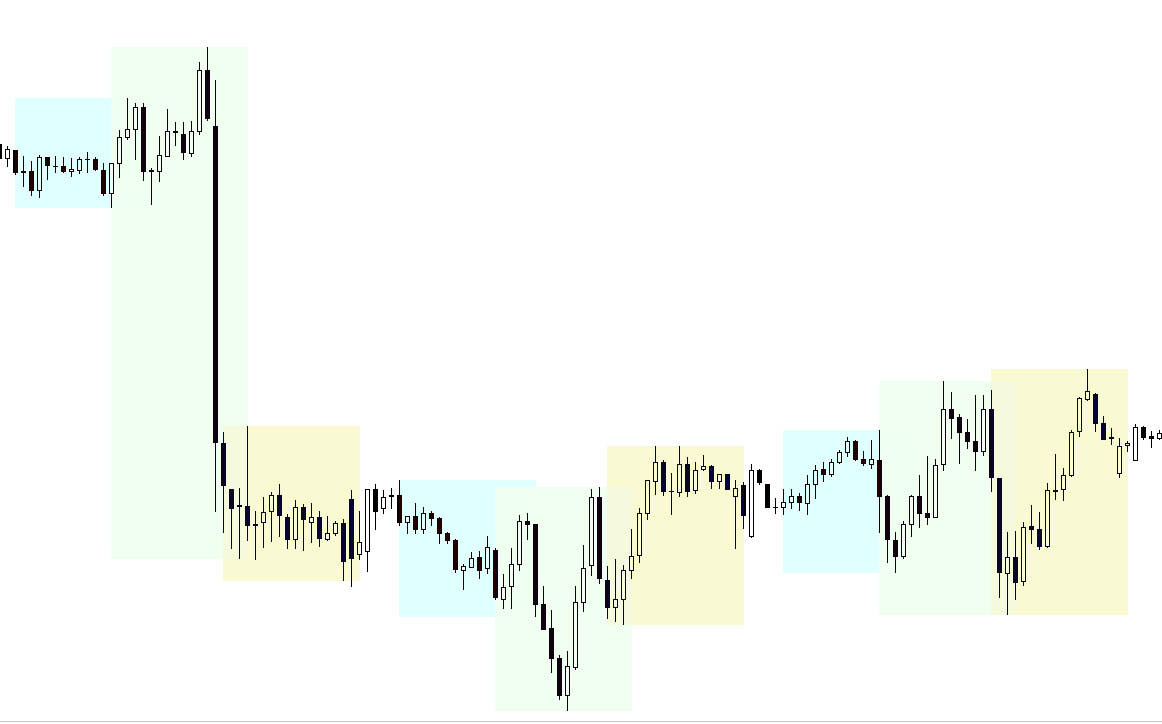
Use the trading session as a structured timing framework: mark the Asian range and liquidity, wait for a sweep and a confirmed displacement at the London open, then enter on a retrace into an identified Fair Value Gap after a Market Structure Shift, managing risk back toward breakeven and layered profit-taking. Treat each time block as a distinct decision window with clear rules for where stops, targets, and partial exits live.
AquaFunded lets you trade firm capital up to $400,000 so you keep skill-based upside without risking your own equity. You can choose instant funding or prove performance through configurable evaluation paths, hit profit targets that are deliberately attainable, and keep up to 100 percent of earnings with a fast payout guarantee within 48 hours. Over 42,000 traders use these programs, and AquaFunded reports paying out more than $2.9 million in rewards, making it a practical way to scale position size while preserving execution focus.
Record the Asian range and key liquidity clusters, then map where stops are likely to be placed, usually stacked just beyond the Asian high or low. Mark nearby Fair Value Gaps and structure breaks that could later act as precise entry windows. Think visually, like plotting buoys on a river: you mark hazards, current seams, and likely eddies so you know where the price will be pushed and where it will slow.
Expect a liquidity sweep beyond the Asian boundary, not a clean breakout. Wait for that sweep and the subsequent manipulation to finish before committing. The reliable signal is displacement, a sharp reversal that breaks structure back through a prior level; that move shows the market has taken the stops and is now returning to pursue the directional flow.
Require a Market Structure Shift, where price creates a fresh high or low and invalidates the previous structure, then find the nearest FVG that formed during the displacement. Allow price to retrace into that gap and show rejection on an M1 or M5 candle before entering in the direction of the MSS. For example, if the Asian high was swept and structure broke lower, wait for a retrace into a bearish FVG and a clear rejection before initiating a short.
Place your stop beyond the FVG or the swing high/low that invalidates the setup, and size so your 1R loss is meaningful but survivable. Ladder targets the next liquidity pocket—the prior day's high or low—or aims for a 2R to 3R profile, depending on volatility. Once the trade moves in your favor, take partial profits and raise stops to breakeven to convert risk into optionality.
Watch for session-specific exhaustion; many reversals appear mid-London as participation thins and order flow shifts. Close positions before the U.S. session unless the trade aligns with a clear New York bias and shows strong continuation momentum. If you do hold, treat the position like a staged investment: reduce size or tighten stops before the next session overlap.
Most traders still run this workflow manually because it fits familiar habits, especially when speed matters in a live session; it feels normal and can work in low-complexity setups. Over time, however, manual mapping fragments as you manage more pairs, tighter timeframes, or multiple funded accounts, and that friction shows up as missed entries and inconsistent execution. Platforms such as AquaFunded centralize session markers, liquidity overlays, and account-level sizing, so traders can preserve timing discipline while scaling, reduce coordination drag, and maintain consistent execution.
Over 75% of traders use the trading session feature to enhance their decision-making process. , which explains why session tools are now standard in active trader toolkits rather than optional extras.
The trading session can reduce analysis time by up to 40%, a reminder that a disciplined session workflow buys real time for execution, not just theory.
A quick note on execution nuance: favor entries confirmed on low-timeframe rejections, because momentum entries after a displacement routinely fail without microstructure confirmation; the smallest candle that shows rejection is often the clearest signal for load size. Picture it like a photographer waiting for the exact shutter click, not firing during blur.
You’ll see how these timed windows multiply across instruments next, and that multiplication hides an important hidden pattern you’ll want to spot.
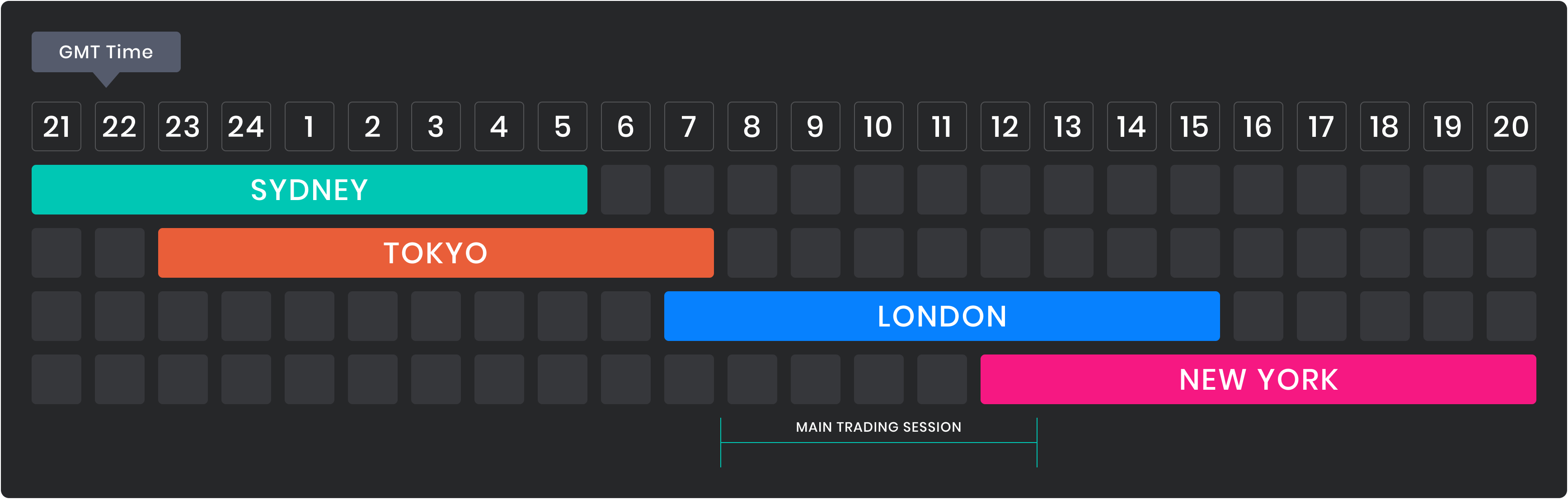
The four main forex sessions divide the trading day into distinct windows you can plan around, each with its own liquidity profile, participant mix, and execution quirks. Know when they start and which pairs move most, and you turn time into an edge instead of a source of random risk.
There are about 252 trading days in a typical year, so mapping session routines to a yearly cadence helps you manage fatigue and position sizing. Also factor in roughly 104 weekend days, which create predictable gaps you must respect when holding positions across the break.
Sydney opens the global cycle and sets the early tone, but activity is lighter than the others. Expect thin order books and wider spreads except on AUD and NZD crosses, where local news and resource-sector flows can move prices. Typical EST window, roughly 7:00 AM to 4:00 PM, is a good time to mark structure and liquidity clusters, not to load prominent, illiquid positions. Treat entries here as scouting moves, not commitments, because the real momentum usually arrives later.
Tokyo brings more consistent liquidity than Sydney and concentrates activity around JPY crosses and pairs tied to Asian cash markets. The typical EST span runs about 9:00 AM to 6:00 PM. During this session, large regional banks and institutions position ahead of European flows, so watch for range-building and intraday mean reversion setups rather than violent breakouts. If you trade USD/JPY or EUR/JPY, this is when directional bias often takes its first shape for the day.
London is where European order flow and global FX desks converge, producing tighter spreads and faster fills in many majors; its EST hours are about 3:00 AM to 12:00 PM. Overlaps with Asia and New York create the most tradable impulses, but the single-session structure tends to include short, sharp liquidity grabs before persistent trends form. For discipline, size smaller at open, then scale into confirmed directional moves once those grabs resolve.
New York brings U.S. economic releases and heavy institutional participation, roughly 8:00 AM to 5:00 PM EST, and its overlap with London produces the day’s highest volume for many pairs. Volatility often peaks early in the session, then decays as European desks close. If you hold through the afternoon, you must tighten execution rules because post-overlap liquidity thins and moves can reverse as the session winds down.
Most traders choose sessions by habit, trading the hours that match their clock and risk tolerance. That approach works early on, but as you increase size or run multiple accounts, it fragments execution: entries get mistimed, slippage increases, and performance becomes noisy rather than repeatable. Platforms like AquaFunded centralize session markers, liquidity overlays, and account-level sizing, so teams find they preserve discipline and consistent execution as position counts grow, rather than relying on manual checklists that break under load.
When session switching causes you to second-guess, the emotional cost shows up quickly: boredom during thin sessions, FOMO when London opens, and the urge to “make up” losses after a bad trade. This pattern appears across retail and funded-account traders, where the root cause is behavioral, not technical; you adjust by locking rules to time blocks, predefining session size, and journaling entries so emotion cannot hijack your plan. Practically, treat each session like a separate product, with its own risk budget and checklist, and you reduce overtrading and revenge trades.
Think of the sessions like engine rooms on a ship, each with a different crew and noise, where your job is to choose the right engine for the distance you intend to travel, rather than trying to run them all full throttle at once.
Most teams manage this by time-blocked rules, but that standard practice carries hidden costs as activity scales: execution inconsistency, missed fills, and fragmented PnL attribution. Platforms such as AquaFunded streamline session-aware routing and risk templates, enabling traders to maintain the same decision rules while increasing capital or the number of instruments.
AquaFunded’s funded trading program gives traders instant access to accounts up to $400K, with flexible terms, no time limits, achievable profit targets, and up to a 100 percent profit split, backed by fast payouts. Join over 42,000 traders who’ve earned rewards and tap instant funding or configurable challenge paths to scale consistent execution without risking your own capital.
That routine makes sense until you face the overlap hours, when something unexpected always comes up.

Open-hour trades demand sharp timing, deliberate sizing, and ironclad rules: use short-duration positions that cut losses fast, hunt breakouts with explicit confirmation, and tighten risk when liquidity is shifting. If you trade the open without those controls, you will feel the market punish hesitation and slippage, not reward intuition.
Most teams handle sizing and routing manually at the open because it is familiar and requires no extra setup, which makes sense early on. But as capital and trade counts grow, that habit fragments execution, leading to inconsistent fills, missed entries, and opaque PnL attribution. Platforms like AquaFunded provide session-aware order templates, automated size scaling tied to latency and liquidity signals, and live fill-quality alerts, so teams can preserve consistent execution without rebuilding rules every morning.
One last thing to remember: the open rewards discipline, not bravado, and your rules should make acting simple when the market makes everything else chaotic.
That pattern looks finished, but the real question is who will supply the capital, rules, and execution scaffolding to make it sustainable.
Scaling a reliable trading edge often stalls on capital and emotional drag, so I recommend AquaFunded as a practical, controllable step to test size and discipline. They offer up to 50% off Your First Funded Account for Futures Trading and options, letting you match capital and costs to how you prefer to scale.
