55% OFF + 2 FREE ACCOUNTS
Limited Time
Code:
GUNTER

Discover the 10 best long-term trading strategy options and learn how to choose the right one for your investing goals.
Imagine trying to grow a small account while markets test your patience and every loss feels personal. You may have asked What is a Funded Account as a way to access more capital without risking your own cash, and picking the best long-term trading strategy matters more than ever. This article breaks down practical tools—position sizing, risk management, portfolio diversification, trend following, mean reversion, technical and fundamental analysis, backtesting, stop-loss rules, and smart capital allocation—so you can build steady returns and compound over a long time horizon. Ready to trade in a way that fits a funded account and lets you focus on consistency rather than quick wins?
To help you get there, AquaFunded's funded trading program supplies capital, clear risk rules, and ongoing feedback so you can practice disciplined trade planning and scale your results without shouldering all the risk yourself.
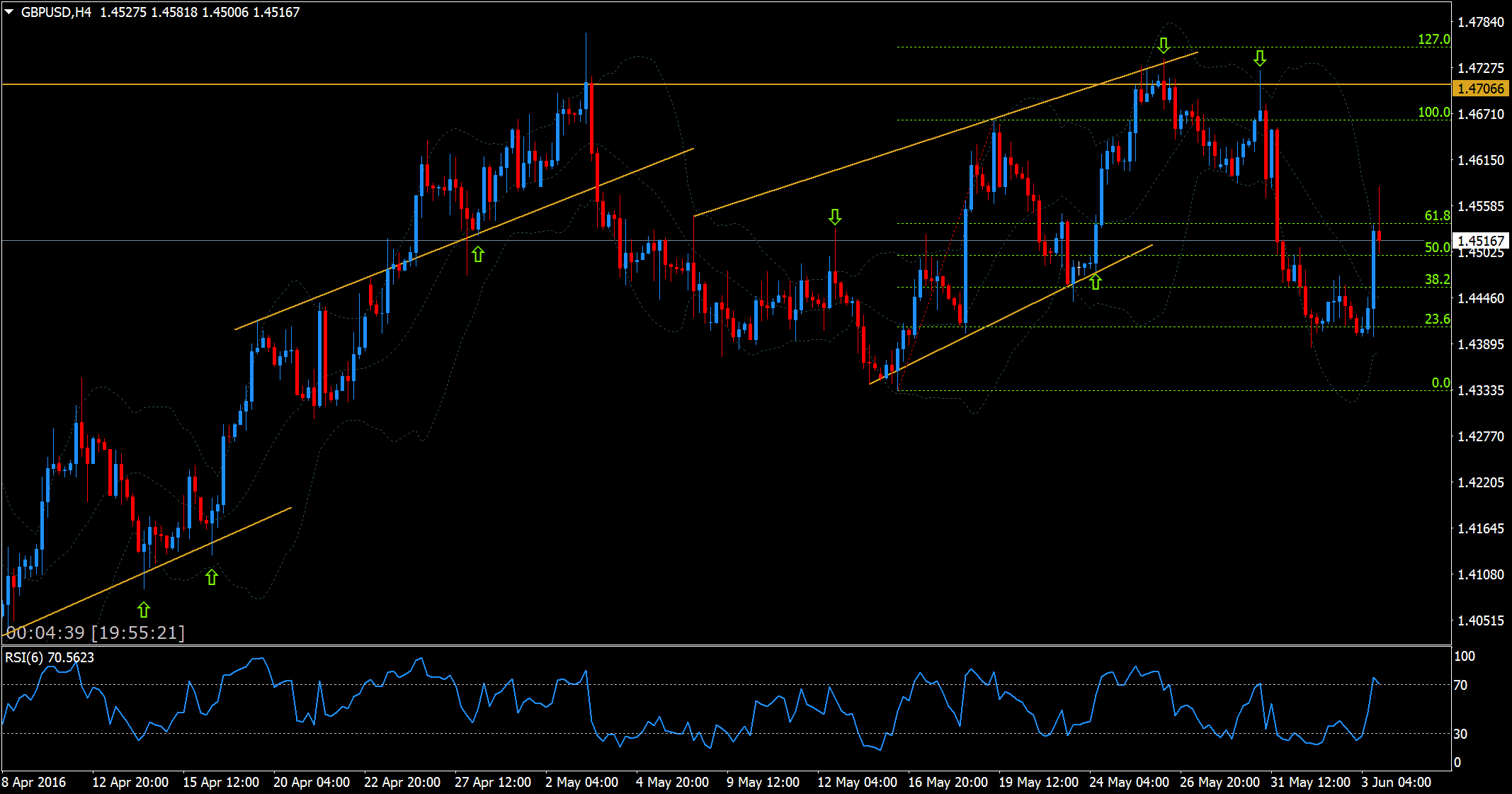
Long-term trading wins when you let time do the heavy lifting: it magnifies small, steady advantages into meaningful wealth while cutting the noise that wrecks short-term decisions. Stick with patient positions, and you reduce friction, emotional churn, and the costs that eat at returns.
Think of returns as an orchard you cultivate, not a vending machine. Reinvested dividends and gains buy more shares, and over the years, those added shares produce their own returns, which you then reinvest. That repeating cycle creates exponential growth, and it is why the math of long-horizon equity ownership matters, given that the average annual return of the S&P 500 over the past 90 years has been approximately 9.8%, according to Gotrade Blog. The longer you hold, the more that small percentage compounds into outsized results.
This feels practical because it is practical. When short-term swings stop dictating every move, you trade less out of fear and more from a plan. I’ve seen the pattern: pressure from immediate expenses or lifetime commitments, like high deductibles or long mortgages, turns patient plans into reactive scrambles. A disciplined, long-term approach replaces that daily anxiety with scheduled check points and clearer, calmer decisions.
Every trade carries a price, not only commissions but also bid-ask spread, slippage, and tax consequences when gains are short-lived. By trading infrequently and avoiding churn, you keep more of your gains working for you. That lower turnover also simplifies your bookkeeping and reduces the odds of costly mistakes that compound over time.
Owning productive businesses for years lets you capture innovation, rising earnings, and broad economic progress rather than trying to time temporary headlines. When we frame investing as ownership, you focus on competitive advantages, management quality, and industry trends, not minute-by-minute market noise. That perspective helps you ride multi-year trendlines instead of being bounced out on short-term fear.
History favors patience in a way that is hard to ignore, which is why long holding periods tend to produce consistently positive results: long-term investors who held onto their investments for at least 20 years have historically seen positive returns 100% of the time, as documented by Gotrade Blog. That does not mean every year will be smooth, but it does mean a disciplined horizon materially shifts the odds in your favor.
Most traders respond to volatility with activity because action feels like control. That familiar approach works when markets are quiet, but as noise increases, it fragments portfolios and turns attention into cost. Platforms like AquaFunded give traders scheduled rebalancing, built-in risk limits, and centralized reporting, so teams find they can preserve compounding growth while stopping the reactive trading that quietly erodes returns. Picture the difference this way: short-term trading is sprinting up a flight of stairs, stopping every few steps to catch your breath; long-term trading is learning to climb with a steady stride and a loaded pack, covering far more ground with less exhaustion. There is more beneath the surface, and the next part uncovers the tensions that can make patient strategies surprisingly fragile.
Long-term trading is not a safe harbor; it is a set of tradeoffs you manage. You gain time and strategic clarity, but you also forgo short-term opportunities, lock in capital, and risk that shifting markets or operations will erode your edge unless you actively guard against those frictions.
When you commit capital to a slow-moving plan, you miss some tactical upside. Short-term yield bumps, temporary sector rallies, and quick arbitrage windows emerge and vanish, and remaining deliberately patient means you cannot always join them. That constraint shows up in two ways: first, tactical misses during compressed rallies reduce realized returns relative to an opportunistic overlay; second, holding a broadly diversified sleeve to limit drawdowns can mute peak performance because diversification spreads risk rather than concentrating gains.
We see this pattern when portfolios stack similar broad-market ETFs, creating hidden overlap that behaves like a concentrated bet on a single sector, which feels like paying for insurance while surrendering the upside. Emotionally, it is the frustration of watching a fast move unfold while you hold to plan, knowing you could have chased gains but chose stability.
Illiquidity is not an abstract cost; it is a real constraint on choices. Many longer-duration instruments assess penalties or impose notice periods, and when markets move fast, you may be forced to sell at a bad price or accept lower returns to raise cash. Illiquidity also compounds operational risk: if a margin call or an opportunity requires immediate capital, slow-to-liquidate positions force trade-offs between crystallizing losses and missing tactical entry points.
Practically, that means building explicit liquidity buffers, laddering shorter-duration instruments, or designing exit pathways before you commit, because improvising access under stress is where plans fail. The anxiety of having capital trapped while volatility spikes changes decision quality; it turns measured patience into a source of vulnerability.
Markets rotate, policy regimes change, and currency moves alter expected returns, and a long-term posture that does not adapt will underperform. Structural shifts in sector leadership, rising rates, or foreign exchange moves can transform a steady-hold thesis into a multi-year drag. The operational side is equally unforgiving. Platforms, workflows, and risk controls that worked when volumes were lower begin to leak value as complexity rises, and upgrading them is more complicated than it looks.
As Chris DeBrusk reported in 2025, 50% of traders believe that adapting to new technologies is a significant challenge for long-term trading strategies. In 2025, adopting new tools was a genuine strategic hurdle, not just an IT project. Rising overheads amplify that strain, as Chris DeBrusk, trader, noted in 2025 that operational costs have increased by 30% over the past five years. This pushes teams to squeeze efficiency out of processes rather than invest in smarter risk management.
Most teams handle reconciliation, approvals, and strategy overlays with manual processes because they are familiar and require no new vendor vetting. That approach works at a small scale, but as positions grow and oversight requirements compound, silos form, responses slow, and errors multiply. Platforms like AquaFunded centralize position data, automate rebalancing rules, and surface margin and liquidity exposures in real time, compressing review cycles from days to hours while keeping audit trails intact.
Picture these challenges like tending a garden: patience yields value, but you still prune, water, and rotate crops; otherwise, the plot will decline under pests and weather. That practical tension is only the beginning, and the next section will show which specific long-term strategies actually survive these pressures and when you should tilt or hold.
The best long-term trading approach is not a single method; it is a disciplined framework that aligns with your time horizon, capital requirements, and tolerance for drawdowns, and enforces clear entry, sizing, and exit rules. Across those frameworks, the highest-probability strategies are the ones that scale rules, not feelings, so you can keep exposure aligned as markets shift, according to TradeReview. The average annual return for long-term investing strategies is approximately 7% over the past 50 years, underscoring why structure plus patience matters both numerically and behaviorally.
Most teams handle portfolio coordination through manual threads and spreadsheets because that workflow is familiar and requires no new vendor buy-in. As complexity grows, that approach fragments decisions across documents and people, response times stretch from hours to days, and critical context is lost. Platforms like AquaFunded centralize position data, automate rebalancing rules, and surface margin and liquidity exposures in real time, compressing review cycles from days to hours while keeping full audit trails and automated alerts.
A pattern I see across instruments and markets is simple: tactical advantages disappear when fees, funding, or operational drag are ignored. Long-run edge can vanish because funding rates accumulate on perpetuals, borrow costs clip returns on short positions, or manual reconciliation delays force bad sales in stress. Address that by including explicit fee lines in all forward-looking return assumptions and by running scenario tests that quantify how recurring costs change your outcome.
When choosing among these strategies, match the method to the constraint, not the market mythology: if you need liquidity within 12 months, avoid deep position locks; if you cannot tolerate daily P&L swings, favor market-neutral or low-volatility sleeves. Think of strategy selection like tailoring clothing, not picking a label, because fit is what keeps the system intact under stress. That simple truth leads to a more complex question about selection and trade-offs, and what comes next will make the choice more tactical than theoretical.

Choose a long-term trading strategy by matching what markets actually do, what your nerves and calendar will tolerate, and what survives fees, capacity limits, and regime shifts over the years. Pick a method you can execute precisely, measure objectively, and hold through the worst historical stretch without abandoning it.
How do you know if an asset wants to trend or mean-revert? Run simple diagnostics: a rolling autocorrelation, a Hurst exponent test, and a “time-in-trend” metric that counts contiguous directional months over 5, 10, and 20-year windows. Use those diagnostics to pick the toolset—trend filters for persistent direction, regime filters, and short stops for choppy markets. This is a quantitative filter you can run today, and it prevents you from fitting a scalping plan to a slowly moving market.
Ask what the asset does over multi-year windows, then map strategies to that behavior. Compute realized skew, volatility-of-volatility, and the frequency of regime shifts. When volatility-of-volatility is low and trending episodes last many months, favor position sizing that lets winners run. When returns cluster into short bursts and reversals, design mean-reversion or market-neutral sleeves, also accept practical portfolio-level constraints: according to Finimize Analysts (2025), 70% of long-term investors prefer a diversified portfolio strategy. Mentioning diversification is not a virtue signal; it is a capacity-management rule that changes how you size and hedge every bet.
Most strategy failure comes from abandonment during drawdowns, not from a broken edge. Quantify the worst rolling drawdown over a long historical period and the most extended stagnation period in months—sized positions so those drawdowns do not trigger margin calls or panic selling. Use Monte Carlo trade-sequence tests to estimate the probability of consecutive losing months, and set the risk per trade to keep the ruin probability acceptably low. This is where psychology meets math: if a theoretical worst-case destroys your resolve, your model is academically good but practically unusable.
If you cannot log daily screens, choose approaches that tolerate infrequent checks, like monthly rebalancing or volatility-targeted sleeves. Build a time budget: allocate specific hours to research, execution, and review, and automate the rest. Overtrading shows up in two ways: lower net returns and creeping complexity; prevent both by codifying a monitoring cadence and committing to it as a non-negotiable operational rule.
Aim for returns that are steady and repeatable. The market benchmark for long-term strategies sits near an average annual performance of around 8 percent, according to Finimize Analysts, 2025. The average yearly return for long-term trading strategies is 8%. Use Sharpe, Sortino, and a rolling worst-year metric to decide if that 8 percent is delivered with tolerable swings. If a strategy needs rare “home runs” to hit targets, it will break under real-world friction or when crowding increases.
Build a cost model that includes commissions, spreads, market impact, ATR-based slippage rules, and, for derivatives, funding and borrowing fees. Run the model on historically sampled order sizes and market microstructure snapshots to assess how much gross edge the market will capture. Recognize special costs in crypto, like funding rates and liquidation risk. If a plan depends on perpetual leverage without fee accounting, small recurring charges silently erode returns and increase behavioral stress.
Backtesting is necessary but not sufficient. Insist on walk-forward validation, parameter stability heatmaps, and multiple out-of-sample windows. Paper trade or run a live small-capacity tranche for 6 to 12 months to capture real slippage and execution surprises. Favor strategies with compact rule sets that survive reasonable parameter perturbations, because brittle, indicator-heavy recipes will fail when the market’s statistical properties shift.
Evaluate how your edge decays as capacity grows, how crowded the signals are, and how regulatory or structural shifts would affect execution. Run stress scenarios where liquidity vanishes, margin requirements jump, or a correlated asset collapses. If the strategy relies on tight market structure or niche frictions, plan an exit path and a migration plan years in advance, not after the first crisis.
Can you tolerate the historical drawdown without changing behavior? Does the strategy align with the asset’s long-term statistical tendencies and liquidity profile? Can you execute the plan within your available time and operational capacity? Have you modeled all recurring costs and funding fees? Will the method survive scaling and at least two regime shifts in a decade? If any answer is no, either smaller size, simplify rules, or choose a different method.
Most teams coordinate this work with spreadsheets and ad-hoc alerts because those tools are familiar and cheap, which is sensible at a small scale. As positions, collaborators, and regulatory needs grow, that approach fragments decisions, slows response times, and buries context. Teams find that platforms like AquaFunded centralize position data, automate rebalancing rules, and surface liquidity and margin exposures, compressing review cycles from days to hours while keeping auditable records. This next choice is the one that will make your plan survive or break under pressure, and it usually hinges on one emotional point most traders ignore.
The best long-term trading strategy depends on patient position sizing and disciplined risk management. Yet short deadlines too often lead to overtrading and early exits that erode that edge. Platforms like AquaFunded remove time limits, offer funded accounts up to $400,000, and let you keep up to 100% of profits without risking your own capital. Consider applying if you want a patient plan to play out.
