55% OFF + 2 FREE ACCOUNTS
Limited Time
Code:
GUNTER

Wondering how many day traders are successful? See the latest stats and what they reveal about your real chances in day trading.

Day trading can be thrilling, but it's not as easy as it looks. Many traders leap in, hoping to make a quick profit, only to find it's tougher than they thought. So, how many day traders succeed? The answer might surprise you. This guide will give you the insight you need to make the most of your trading. And if you're serious about improving your skills, knowing where to learn trading can make all the difference. Understanding what works and what doesn’t can help you make smarter moves with your money.
One great way to improve your trading is with Aqua Funded’s funded trading program. This program can help you maximize your capital and trading potential.

Day trading is alluring, yet most traders don’t make a profit. Studies highlight its inconsistency. For instance, a study from Taiwan reveals that only about 1% of day traders achieve consistent profitability after factoring in fees and costs. Meanwhile, many traders experience short-term wins but ultimately lose money over time.
Survivorship bias skews perceptions of day trading success. Simply put, people hear about the few successful traders while ignoring the many who fail. This creates a false sense of success and leads new traders to underestimate the substantial risks.
Even when traders win, high transaction costs, taxes, and slippage can devour profits. Frequent trades accumulate fees, especially for retail traders without the benefits institutions enjoy. This often turns seemingly profitable trades into losses.
Skill and experience matter, but they’re not guaranteed. Even seasoned traders struggle with consistent success due to rapidly changing market conditions. Trading strategies that work one day may fail the next. Plus, traders often mistake luck for skill, leading to riskier behaviors.
Some traders do profit, but they’re rare. Successful traders usually have advanced tools, fast data access, and institutional-level execution capabilities. They practice strict risk management, possess emotional discipline, and often benefit from trading environments like firms or prop trading settings.
The psychological toll of day trading is significant. Constantly monitoring charts and reacting to price swings is mentally exhausting. Many traders make poor decisions under stress, which affects profitability.

When it comes to day trading, only a small fraction manage to turn a profit consistently. Studies from around the world indicate that roughly 1% to 4% of day traders make money over the long haul. For instance, research tracking over 1,500 traders in Brazil for a year found that a mere 3% made any profit at all, and only 1.1% earned more than the national minimum wage after 300 days of trading. Similarly, a Taiwanese study involving over 400,000 traders showed just 0.03% were consistently profitable after costs. These numbers underscore how rare it is to succeed in day trading.
The harsh reality is that the majority of day traders—often between 70% and 95%—lose money over time. Some analyses reveal that about 80% to 90% of traders find themselves in the red within just a few months of starting. Frequent trading seems to exacerbate this trend, with data showing that more trades often lead to worse performance. Many traders fare worse than basic long-term strategies like holding an index, showing that even doing nothing can be better than active trading attempts.
Even those who start strong often struggle to maintain their success over time. A comprehensive study of thousands of accounts found that only around 5% remained profitable after 12 months, and fewer than 1% stayed profitable after two years. Many traders continue despite losses, driven by overconfidence or the hope of recovery, but this usually leads to further setbacks.
The psychological side of trading is just as important as technical skills, if not more so. Most traders lack proper risk management and often make emotional decisions without a clear strategy. Impulsive trades, revenge trading after losses, and exits driven by fear can turn even well-thought-out trades into failures. Overconfidence after a few wins can lead to excessive risk-taking, which often ends badly.
Despite the odds, a small number of day traders do find success. These traders typically have a strict risk management plan, a well-tested strategy, and the ability to adapt to changing market conditions. They also display emotional control, patience, and consistency. Some have access to professional tools or mentorship, which can provide a significant advantage.
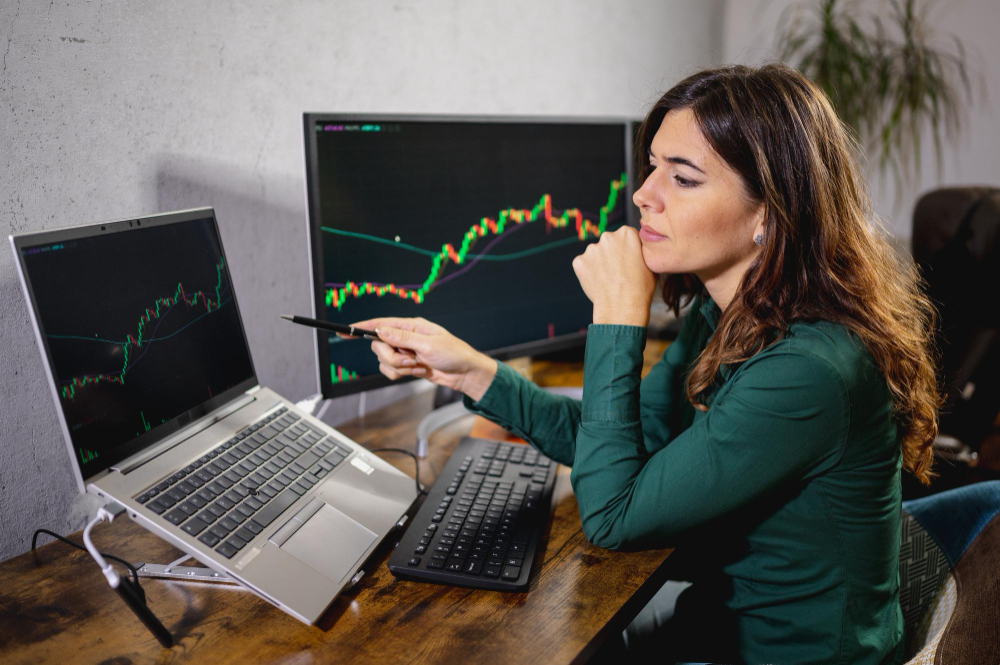
Successful traders are wholly committed to their craft. They eliminate distractions and give their full attention to the trading day. Anything that pulls focus is pushed aside until the markets close. This unwavering dedication allows them to respond to market shifts with precision and clarity.
Top traders constantly reflect on their strengths and weaknesses. They devise strategies to leverage their strengths while addressing their weaknesses. Unlike others, they don’t compare themselves to their peers. Instead, they focus on meeting the standards they set for themselves.
Self-control is a hallmark of successful traders. They remain calm and composed, regardless of market conditions. Profits or losses do not sway them, ensuring they can function rationally at all times. This level-headed approach prevents emotional decision-making that can lead to costly mistakes.
Successful traders establish realistic goals. They avoid taking irrational risks to chase windfalls. They understand they cannot control the market, and losses are inevitable. By maintaining realistic expectations, they position themselves for long-term success.
Patience is a crucial trait for traders. They know that instant gratification is rare in trading. They don’t chase markets or make impulsive decisions. Instead, they wait for the right opportunities to present themselves, knowing there will always be future chances to profit.
Top traders are adaptable. They adjust to changing circumstances and unexpected events. While they operate within a set of rules, they recognize that market conditions may require changes to those rules. This flexibility allows them to thrive in any environment.
Successful traders take responsibility for their actions. They don’t blame others for their shortcomings. They understand that taking risks is part of the game and are willing to accept the consequences. This accountability fosters a mature and professional approach to trading.
Creative thinking is a valuable asset for traders. They see beyond the obvious and draw ideas from a wide range of sources. They are not afraid to do the unusual or unexpected, which can lead to unique and profitable opportunities.
Self-confidence is essential for traders. They believe in their ability to succeed and don’t let losses shake that belief. They understand that past failures cannot be erased and do not dwell on them. Every trade is a new opportunity to achieve a positive outcome.
Turn your trading skills into substantial profits without risking your capital. AquaFunded’s funded trading program gives you access to accounts up to $400K with the most flexible trading conditions in the industry. Join over 42,000 traders worldwide and start trading today with instant funding options or prove your skills through our customizable challenge paths.

Transform your trading skills into real profits without putting your capital at risk. AquaFunded offers accounts up to $400K with flexible trading conditions, think no time limits, easy-to-achieve profit targets, and up to 100% profit split.
Join over 42,000 traders worldwide who've already collected more than $2.9 million in rewards, all backed by a 48-hour payment guarantee. Start trading today with instant funding options or prove your skills through customizable challenge paths and keep up to 100% of what you earn.
To succeed in day trading, you need more than just procedural knowledge. Keep up with the latest stock market news and events that affect stocks, like the Federal Reserve's interest rate plans and leading indicator announcements. Do your homework. Create a wish list of stocks to trade, and stay informed about the companies, their stocks, and the general markets. Scan business news and bookmark reliable online news outlets.
Assess and commit to the amount of capital you’re willing to risk on each trade. Many successful day traders risk less than 1% to 2% of their accounts per trade. For example, if you have a $40,000 trading account and are willing to risk 0.5% per trade, your maximum loss per trade is $200. Only trade with suitable online brokers and platforms. Set aside funds you can afford to lose.
Day trading requires your full attention. You’ll need to give up most of your day. Don’t consider it if you have limited time to spare. Successful day traders constantly monitor the markets and spot opportunities that can arise at any time during trading hours. Being alert and moving quickly are key.
As a beginner, focus on a maximum of one to two stocks during a session. Tracking and finding prospects is easier with fewer stocks. It’s now common to trade fractional shares, which let you specify smaller dollar amounts to invest. For example, if Amazon.com (AMZN) shares are $170, many brokers will let you buy a fractional share for as low as $5.
While you might be tempted by the low prices of penny stocks, it’s better to avoid them. These stocks are often illiquid, and the chances of hitting the jackpot with them are slim. Many stocks trading under $5 a share become delisted from major stock exchanges and are only tradable over-the-counter. Unless you see a real opportunity and have done your research, stay clear of these.
Many orders placed by investors and traders begin to execute as soon as the markets open in the morning, contributing to price volatility. A seasoned player can recognize patterns at the open and time orders to make profits. For beginners, it may be better to read the market without making any moves for the first 15 to 20 minutes. The middle hours are usually less volatile. Then, the movement begins to pick up again toward the closing bell. Though rush hours offer opportunities, it’s safer for beginners to avoid them at first.
Decide what type of orders you’ll use to enter and exit trades. Will you use market orders or limit orders? A market order is executed at the best price available, with no price guarantee. It’s useful when you want to enter or exit the market and don’t care about getting filled at a specific price. A limit order guarantees the price but not the execution.
Limit orders can help you trade more precisely and confidently because you set the price at which your order should be executed. They can also help cut your losses on reversals. However, if the market doesn’t reach your price, your order won’t be filled, and you’ll maintain your position. More sophisticated and experienced day traders may also employ options strategies to hedge their positions.
A strategy doesn’t need to succeed all the time to be profitable. Traders can be successful by only profiting from 50% to 60% of their trades. However, they need to profit more from their winners than they lose on their losers. Ensure the financial risk on each trade is limited to a specific percentage of your account and that entry and exit methods are clearly defined.
Frequent reflection on your trading behavior is crucial. It helps you identify patterns, learn from past mistakes, and fine-tune your strategies. This fosters continuous learning and adapting to ever-changing market conditions. Additionally, it encourages discipline and emotional control, which are key to successful trading.
Successful traders have to move fast, but they don’t have to think fast. Why? Because they’ve developed a trading strategy in advance, along with the discipline to stick to it. Follow your formula and methodology closely rather than chasing profits. Don’t let your emotions get the best of you and make you abandon your strategy. Remember a mantra of day traders: plan your trade and trade your plan.
Want to trade big without risking your own money? Meet AquaFunded. They offer accounts up to $400K, letting you test your skills without sweating your savings. Imagine turning your trading know-how into real profit. AquaFunded makes this possible, and they’re changing the game. With no time limits and flexible conditions, you can focus on making profits. The best part? You get to keep up to 100% of what you earn.
Over 42,000 traders worldwide have already jumped on board, collecting more than $2.9 million in rewards. This isn’t just about the money; it's about being part of a community where traders support each other. AquaFunded’s 48-hour payment guarantee ensures you get paid quickly. It's a system built on trust and efficiency. So if you’re tired of doing it alone, this might be what you’ve been looking for.
AquaFunded gives you options. Want to start trading today? Choose instant funding. Prefer to prove your skills first? Try one of their customizable challenge paths. This flexibility lets you trade your way. Whether you're a seasoned pro or just starting, they've got something for you. It’s all about finding what works for you and making it happen.
