55% OFF + 2 FREE ACCOUNTS
Limited Time
Code:
GUNTER

Forex Trading Spreads hurt profit margins. Discover how AquaFunded’s clear strategies simplify cost management and boost execution for smarter trades.

Precision in chart analysis does not guarantee profitability when trading costs erode margins. Many Forex Trading Success Stories emphasize how managing trading spreads, pip values, and execution methods can safeguard gains amid volatility. Controlling factors such as broker type, fixed versus variable spreads, and commission structures is key to mitigating slippage. A clear strategy for reducing spread costs helps traders preserve profits amid rapidly shifting market conditions.
Market dynamics require continual strategy refinement to handle sudden liquidity changes and volatility. Traders adapt their methods to exploit favorable conditions while minimizing losses from high bid-ask spreads. Robust risk management, paired with advanced execution tools, enables a more resilient approach to market uncertainties. AquaFunded’s funded trading program offers capital access and precise execution support that aligns with these disciplined trading strategies.
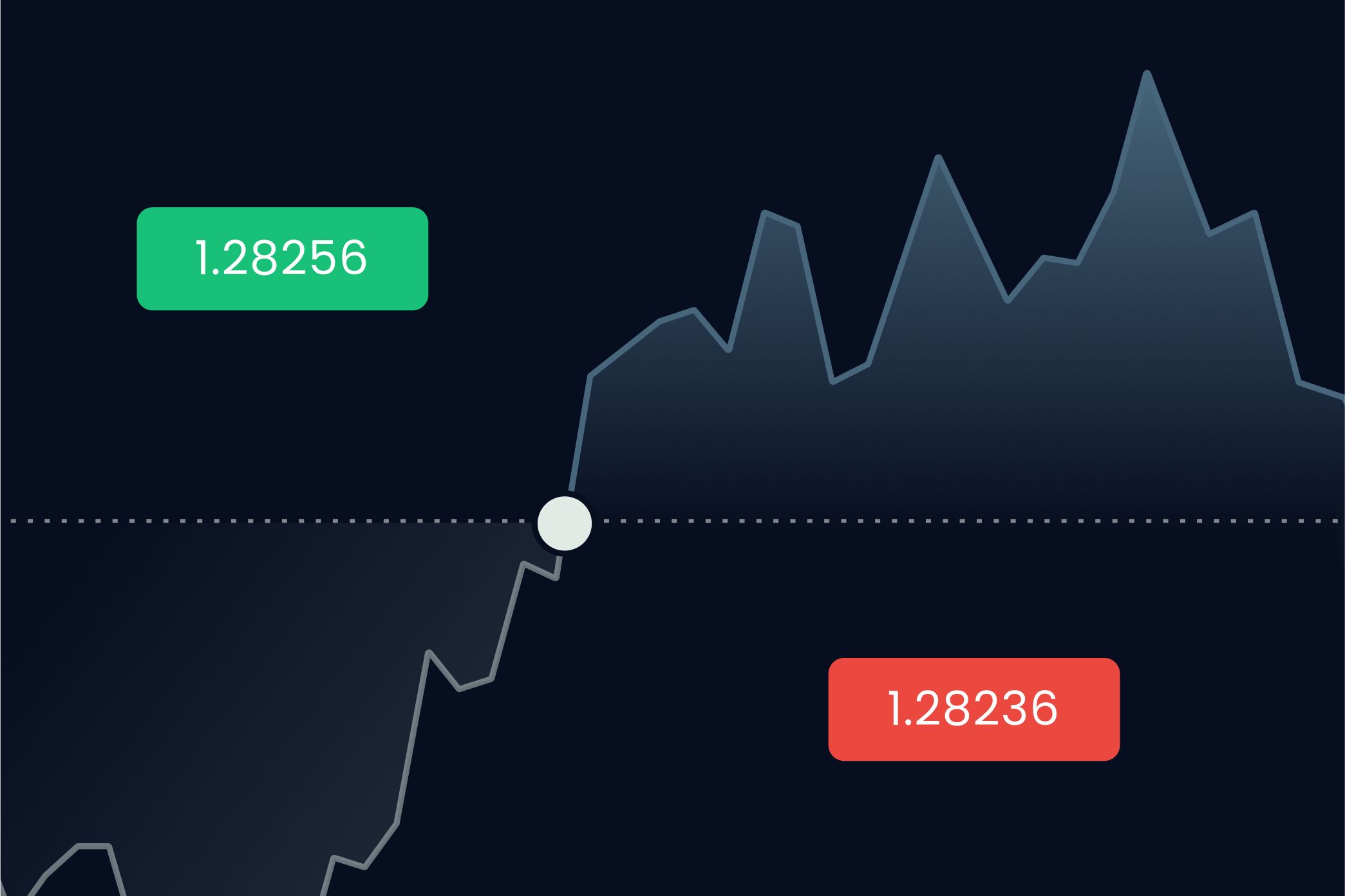
The forex spread is the difference between the price a broker will pay you for a currency and the price they will sell it to you, shown in pips. It shows the instant cost you pay for each trade. Traders should view the spread as a built-in fee that exists before the market moves; it determines how much the price must move in your favor before you start making a profit. Understanding your options is crucial, and our funded trading program can help you navigate these complexities effectively.
Forex prices are shown as two numbers, the bid and the ask, presented together like 1.1200/1.1250. The first number shows what the market will pay to buy the base currency, while the second number shows what the market will accept to sell it. You can think of these two numbers as a simple offer and counteroffer that traders respond to. The bid is the price at which the broker or market maker is ready to buy the base currency from you; it is quoted against the counter currency. When you want to sell, you will receive the bid price.
On the other hand, the ask is the price at which the broker is willing to sell the base currency to you. When you make a buy order, you will pay the ask price. The bid-ask spread is just the difference between the ask and the bid. This small gap incurs an immediate cost on each round trip, serving as the broker’s payment for liquidity, execution risk, or service. Quoted prices directly impact your trades. If you buy at the ask and then immediately sell back, you will receive the bid price. This means the quick round-trip costs you the spread, underscoring how vital spreads are, even in low-volatility periods.
When looking at a price pair like $1.1200/1.1250, buying euros at the $1.1250 ask costs $1.1250, while selling immediately gives back $1.1200. This trade would result in a $0.0050 loss from the bid-ask spread, assuming the market doesn’t move. Think of this as a small fee for every entry and exit, a necessary passage for each change in position. This fee becomes more critical with frequent trading or bigger position sizes.
According to Investopedia, "The average spread in the forex market is typically between 1 and 5 pips." This typical range shows why retail traders feel minimal per-trade friction. In contrast, high-frequency or large-volume strategies are more affected by these spreads. To convert pip cost to cash for a standard position, remember that Investopedia states: "A spread of 3 pips on a standard lot of 100,000 units is equivalent to $30." This example demonstrates how position size can magnify even minor pip differences.
This pattern is typical among traders using older desktop platforms: cluttered interfaces and too many unnecessary indicators distract them from simple details such as real-time spreads. When we simplify the interface and remove unnecessary overlays, traders stop looking for signals and begin noticing spread movement and execution slippage. This change affects how they size trades and set targets. Most teams manage spread awareness the traditional way, by relying on quoted prices and chart observations. This method works at first, but as trading frequency and lot sizes increase, the hidden costs of wider spreads and slower execution erode profits. Platforms like AquaFunded offer more transparent pricing feeds, better control over execution delays, and transparent spread displays. This helps traders shift from just accepting costs to actively managing them while maintaining clear records.
A spread is like a doorway between two rooms. It may be small enough for one person to walk through easily, but it gets costly if you are moving furniture through it all day. The wider the doorway or the more trips you make, the more you have to pay in total.
The quiet, unavoidable cost of the spread has significant consequences that affect trading outcomes. Understanding these implications is essential for any trader.
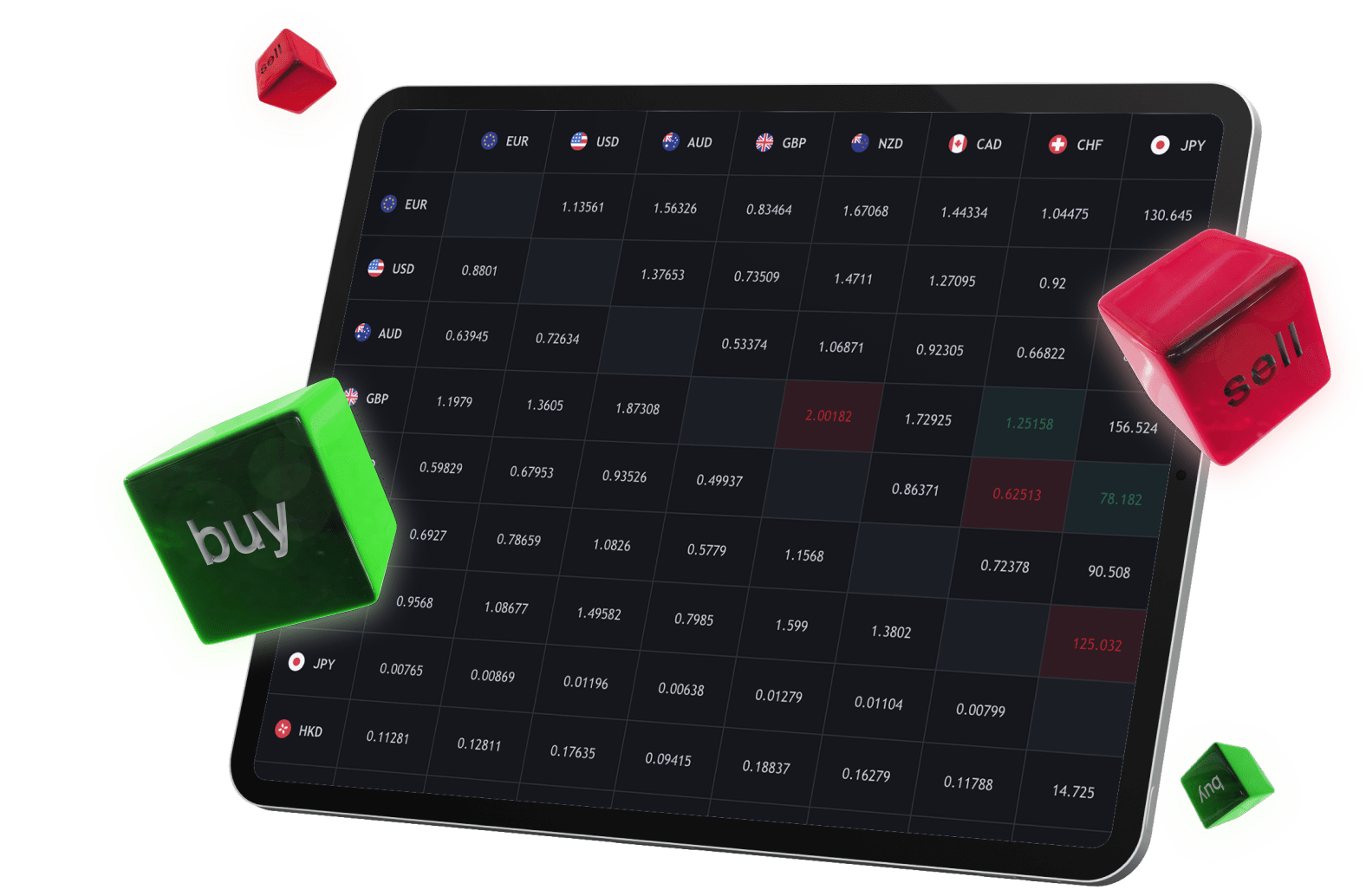
Spreads are a core trading lever that affects how you size positions, choose pairs, and evaluate a broker’s execution quality. They are not just an annoyance; they are something you manage. If you get spreads right, your advantage grows. If you ignore them, even a winning system can do poorly. To enhance your trading experience, consider exploring our funded trading program, which provides tailored support and resources.
Order-entry costs can be viewed as execution drag. When a trade is made, the spread quietly reduces the net edge, so it's essential to consider it as an ongoing cost in the profit and loss (P&L) model. It's helpful to include the spread when setting stop and profit targets before figuring out position size. This helps ensure that the risk per trade reflects realized entry costs rather than just an ideal price on the chart. Systematic traders should include live spread profiles in backtests because historical returns typically decline when real fills are included. For discretionary traders, it helps to subtract the spread from the expected move length mentally. This may require a higher win rate or larger targets to maintain the same expected value.
Execution reliability, not just headline price. Widening spreads change how fills happen. They can turn clean stops into partial fills or cause missed exits when liquidity is low, especially around news events or after hours. To improve fill quality, track metrics such as average slippage, full-fill percentage, and time-to-fill. Then adjust your order type and size based on these factors. Using smaller lots, limit orders at reasonable levels, and scaled entries can help reduce the risk that spread widening will turn a normal trade into a series of bad fills. Measure these metrics across different session durations and venues so you don't assume quotes translate to execution.
Choosing which currency pairs to trade should be a cost-versus-volatility decision, not just based on popularity. Traders should list pairs by cost per expected move, favoring those where spread and liquidity align with their trading strategy. Scalpers need narrow, deep markets, while swing traders can handle wider spreads when there's a greater chance of volatility and trending. Additionally, market structure is changing, which affects selection.
A recent survey by Seacrest Markets finds that 70% of forex traders consider spreads the most critical factor when choosing a broker. This highlights that pricing is usually the key factor for traders when picking where to execute trades. Moreover, competitive pressure and technology improvements are driving quoted costs down across different venues. Therefore, it is crucial to reassess which pairs to focus on as your edge develops.
Notably, Seacrest Markets predicts that the average spread for major currency pairs will decrease by 0.5 pips by 2025. This projection suggests better nominal pricing, but it also requires a reevaluation of where liquidity really exists among brokers and trading sessions.
Trading psychology is significantly affected by the slight pain caused by spreads. Seeing a red number immediately after entering a trade can trigger common reactions, such as hesitation, exiting early, or doubling down to recover the loss. Instead of seeing this response as a weakness, it should be viewed as behavior we need to work around. To manage this, traders can create rules that help normalize the initial cost. For example, planning break-even points that account for the spread can be helpful. Also, practicing responses after entering a trade in a demo session and tracking decisions affected by spread dynamics can improve trading results. Think of spread friction like a sprinter's grip: a little resistance changes how they run. Without practicing with it, a trader may struggle in real trading situations.
A simple analogy illustrates this concept: running with a light ankle weight slightly changes how a person runs at first, but the effects become big over a long run. Similarly, spreads might seem small per trade, yet they can add up to high costs when compounded.
To shape the story I will use when helping you create messages, please provide the client's name, or confirm by using "[Client]". Also, share the target audience (retail, institutional, or both), the specific product type (like a brokerage platform, ECN/STP broker, liquidity provider, trading app, etc.), and the main features they want to highlight (like tight or variable spreads, transparent pricing, fast execution, low delays, education, risk tools, and regulation/compliance).
The surface cost is just the start. The math behind it requires a change in how someone sizes, backtests, and picks venues.
You calculate a forex spread by subtracting the bid from the ask and expressing that difference in pips. This shows the immediate cost for each round trip. You can use the simple formula Spread (pips) = Ask Price minus Bid Price. Then, convert the decimal quote into pip units for the pair you are trading.
Label the difference in pips, which is the smallest move in the market, as shown by IG Bank Switzerland, "The spread in forex is often measured in pips. This unit represents the smallest possible price change for an exchange rate, based on market standards. Using this single number helps traders easily turn decimal quote differences into a trader-friendly cost metric.
The formula for spread (in pips) is calculated as the Ask Price minus the Bid Price. It’s essential to use the same number of decimal places as in the quote. After that, convert the decimal value to pips for your currency pair. For most major pairs, you will usually move the decimal point to count pips consistently across calculations. Use that pip total when building position sizing or setting profit targets.
If a EUR/USD quote shows 1.1012 for the ask and 1.1010 for the bid, subtract the bid from the ask to get 0.0002. This equals two pips for the pair. Use the pip count directly when estimating the entry cost for the trade, then multiply it by the lot size to convert to currency value.
Spreads change all the time because of market conditions, how much people are trading, and news events. That’s why it’s essential to keep an eye on them in real time before you submit orders. By adding live spread profiles to your trade plan, you can estimate transaction costs in advance rather than trying to figure them out after the trade is executed. For the most liquid pairs, the pricing can be very close. As noted by IG Bank Switzerland, "A typical spread for major currency pairs like EUR/USD can be as low as 1 pip." Understanding these details is really important.
During a six-month audit of trading records across retail and prop accounts, a clear pattern emerged: confusion about routing and occasional volatility made it hard to identify the exact profit-and-loss (P&L) drag from spreads. As a result, traders often mistakenly attributed their losses to strategy rather than execution costs. This confusion costs both time and confidence. It is crucial to log fills, record quoted spreads when the order is placed, and compare them to executed fills when evaluating performance.
Calculating the spread itself is simple; however, measuring its real impact is complex. It requires consistently tracking, converting to pip value based on lot size, and a regular habit of checking live spreads before pressing the button.
That simple calculation seems complete until you realize that your execution venue, time of day, and order type subtly affect the real cost.
Use spreads carefully as a cost you can manage, not as a tax you have to pay. Think of them as a tunable parameter in your trading plan and backtests. Adjust your pair selection, timing, and order strategies so the spread works for you rather than against you. Here are six practical ways to turn your understanding of spreads into profit. Each item is a valuable tactic you can use starting today.
AquaFunded turns skill into capital and cleaner execution. AquaFunded gives traders immediate access to funded accounts up to $400,000, with no time pressure, modest profit targets, and profit splits up to 100 percent. Over 42,000 traders have collected rewards totaling more than $2.9 million, with a 48-hour payment guarantee. You can start either with instant funding or by proving your skills through customizable challenge paths. Most traders maintain the same trading habits when they get funded, and that familiar approach masks execution problems as size grows. Manual venue choice and scattered routing create invisible costs. Teams find that funded programs centralize funding, execution options, and reporting.
This way, traders move from juggling brokers to trading a single, auditable account with precise fill analytics and transparent payout mechanics. Use AquaFunded when you want to scale without adding capital risk, and use the platform metrics to isolate spread and slippage as measurable performance inputs, not excuses.
Widening spreads can spike significantly during news events and low-liquidity periods. These changes can turn otherwise profitable trades into losses because of unexpected stop-outs. So, traders should view widening spreads as a normal risk rather than just bad luck. It's essential to monitor a real-time spread heatmap and flag pairs that exceed an acceptable limit. When this happens, think about pausing or changing the order type. Using limit orders is a good idea; if you need market execution, break entries into smaller parts to access the best available liquidity rather than accepting the full quoted spread.
To better understand the cost, note that a spread of 2 pips on a standard lot of 100,000 units is $20, as mentioned in this guide from Dukascopy Bank SA. This change makes slippage clearer and affects how traders size and stack entries around essential events. Lastly, it's crucial to log each widened-spread event, including the pre-order quote, execution fill, and reason code. This practice allows changes to hours, order types, or pair exposure based on measured results.
Choose high-liquidity forex pairs where the market works smoothly. Aim to identify your advantage where depth and volume reduce costs and improve order fill rates. For most strategies, this means focusing on major pairs and the most actively traded crosses. Liquidity is necessary because tight, steady quoting reduces slippage and enables smaller, more precise stops.
In practice, look for pairs with stable spread profiles during session overlaps. Keep a reference handy: the average spread tendencies in major pairs are low. That’s why Dukascopy Bank SA states, "the average forex spread for major currency pairs is typically between 1 and 3 pips." Use this as a benchmark when comparing brokers or account types. Also, rank pairs by cost per expected move instead of by popularity. To do this, calculate the predicted pip movement per session, divide it by the average spread, and select pairs with the highest signal-to-cost ratio for your holding period.
Time-of-day trading: Schedule your trades to match liquidity, not your habits. Trade when the order books are most active for your chosen pair, and make session overlaps a key part of your strategy. The London-New York overlap usually gives the best fills for major pairs. If you need to trade outside that time, consider tightening your order controls, reducing lot sizes, or switching to pairs with active primary hubs. Use short pre-news windows to automatically stagger or cancel orders, and set order refresh times to prevent outdated quotes from causing bad fills. One practical tip is to place limit orders slightly within the current liquidity layers during opening auctions, rather than chasing the market with market orders; this approach preserves probability without paying the full spread cost. Think of these scheduling choices as traffic planning: avoid rush hour if you want to miss the toll.
Technical analysis can significantly improve spread management by including spread behavior in edge signals. Make spread dynamics part of your indicators, instead of something to ignore. For example, think about adding a spread-adjusted average true range (ATR) or an execution-cost filter to your entry rules. When the average actual range increases, adjust your target and stop distances based on the current spread median. On the other hand, if spread volatility rises suddenly, treat it as an early warning and prefer setups with asymmetric reward potential. Also, spread divergence can act as an essential trigger. When prices move while spreads widen simultaneously, it usually indicates the move may lack sufficient support and could reverse. In these situations, it’s better to use mean-reversion entries or reduce your risk. Be sure to backtest using session-specific spread profiles and include the worst-case percentile spreads in your simulations to make sure your edge works during live fills.
The risk-reward ratio should include the spread in every money-management calculation. Include the spread in your position sizing and target math as a hard number, not just a feeling. To find your break-even pips, add your stop size to the round-trip spread, expressed in pips. Set your target so that your net reward is higher than this number by the desired ratio. For example, if your stop is 20 pips and the round-trip spread is 2 pips, your effective risk becomes 22 pips. So, a 2:1 gross target should be 44 pips net of the spread. For added safety, consider using the session's 90th-percentile spread instead of the average when sizing. This method helps protect against occasional widening. Lastly, track realized spread costs for each trade and add them to your expectancy formula, allowing position sizes to adjust based on the actual observed cost.
Think of spreads like toll booths on a highway. You pay a small fee each time you travel, but this cost can become a significant portion of your spending if you make many trips or your trips are longer. This underscores the importance of accounting for these costs when trading frequently or in larger amounts.
This solution seems practical until traders learn about the one execution habit most overlook.
The truth is, even a strong forex edge can break down when spread costs, bid-ask friction, and slippage pile up against a small personal bankroll. If you want to grow without risking your own capital, consider AquaFunded. They offer funded accounts up to $400,000, flexible challenge paths or instant funding, no time limits, and up to a 100 percent profit split. Plus, the program has a 48-hour payment guarantee. This lets you focus on catching pips, liquidity, and execution quality instead of finding cash.
