55% OFF + 2 FREE ACCOUNTS
Limited Time
Code:
GUNTER

Discover the best day trading strategies that work to boost your profits. Learn proven techniques to enhance your trading success today!

Day trading can feel like riding a roller coaster. One minute you're soaring, and the next, you're plummeting. It’s exciting, but it’s also risky, especially if you’re not equipped with the right strategies. Consider logging into a funded trading account and making informed decisions that maximize profits, rather than making mistakes.
This is where knowing the best day trading strategies comes in handy. With a solid game plan—and the best brokers for day trading—you can turn chaos into opportunity.
AquaFunded offers a funded trading program designed to help you reach your goals. Their support and resources can help keep you on track and avoid common pitfalls.

Day trading, when executed well, can deliver substantial profits. With leverage, even small price movements can translate into significant gains. Skilled traders who can predict market shifts and act decisively can enjoy substantial financial rewards.
One of the most enticing aspects of day trading is the independence it offers. Traders can work from anywhere with an internet connection and set their own hours and strategies. This autonomy is appealing to those looking to break free from the traditional 9-to-5 workday.
Day trading hones your decision-making skills as you must quickly analyze market conditions and execute trades. This fast-paced environment can be intellectually stimulating and rewarding for those who thrive in high-pressure situations.
Since trades are closed by the end of the trading day, there's no risk of overnight market changes affecting your positions. This can limit potential losses, providing a sense of control over your investments.
Day trading in highly liquid markets means you can easily enter and exit trades. Plus, technological advancements and online trading platforms have made day trading more accessible than ever.
Day trading provides immediate feedback on your strategies and decisions. This real-time evaluation allows you to quickly learn from mistakes and refine your approach, potentially accelerating your development as a trader.
The flip side of high returns is high risk. Day trading is notoriously risky, with the potential for significant financial losses. Even experienced traders can suffer substantial losses if market conditions are unfavorable or if they make poor decisions.
Day trading is a full-time job that requires immense dedication and commitment. Successful traders spend countless hours analyzing markets, developing effective strategies, and closely monitoring their trades. It demands a significant amount of your time and effort to be invested.
The emotional and psychological strain of day trading can be overwhelming. The constant pressure to make quick decisions, the fear of losses, and the elation of gains can create a rollercoaster of emotions. Managing stress and maintaining emotional balance is crucial for long-term success.
Frequent trading incurs significant transaction costs and fees. This cost can eventually add up and eat into your profits. It's essential to factor in these costs when planning your trading strategy to ensure they don't outweigh your gains.
The thrill of day trading can be addictive, leading some individuals to develop unhealthy trading habits. This addiction can result in reckless decision-making and significant financial losses. It's crucial to maintain a balanced approach and recognize when trading is becoming detrimental to both your financial well-being and mental health.
Successful day trading requires thorough research and analysis. Traders must stay informed about all the market trends, news, and economic indicators. This level of commitment to staying updated can be time-consuming and demanding.

This is the classic approach to day trading. You open and close trades within the same day, minimizing overnight exposure. Traders use short-term technical tools to spot intraday opportunities.
This strategy involves riding strong intraday moves. You enter in the direction of the momentum and exit when it begins to wane.
Scalping involves making numerous small trades to capitalize on small price movements. Trades last from seconds to a few minutes.
Traders enter trades when price breaks past key support or resistance zones, expecting a strong move. Volume or candlestick patterns often confirm the breakout.
This strategy bets on price returning to a mean or average within a short period after a substantial deviation.
Identify price ranges during the day and trade within the bounds. Buy near support and sell near resistance.
Trade significant gaps at market open, either riding the gap’s momentum or trading a gap fill.
Use moving averages on intraday charts to signal entry when a shorter MA crosses above a longer one.
Use indicators like MACD to gauge trend strength and entry/exit signals.
Look for signs of exhaustion and reversal after a sharp price move or wait for pullbacks to join a trend.
Focus on raw price behavior and patterns, such as candlestick formations and support/resistance levels.
Use Fibonacci levels to find areas where price might reverse or stall during a move.
Define algorithmic rules and let a computer execute trades.
Trade around news or economic events to capture abrupt price moves.
Trade two correlated assets, expecting their spread to revert.
Quote buy and sell orders to capture the spread, acting as a liquidity provider.
Rapid algorithmic trading, which exploits micro-price inefficiencies, is typically done by institutions.
Trade based on patterns at or near market close, entering positions in the last minutes.
Trade the retest of a level after it flips from resistance to support or vice versa.
Use volatility indicators to set dynamic bands around price and trade on moves to the outer bands.
Switch among strategies based on market conditions, utilizing breakout methods in trends, mean reversion, or range in sideways periods.
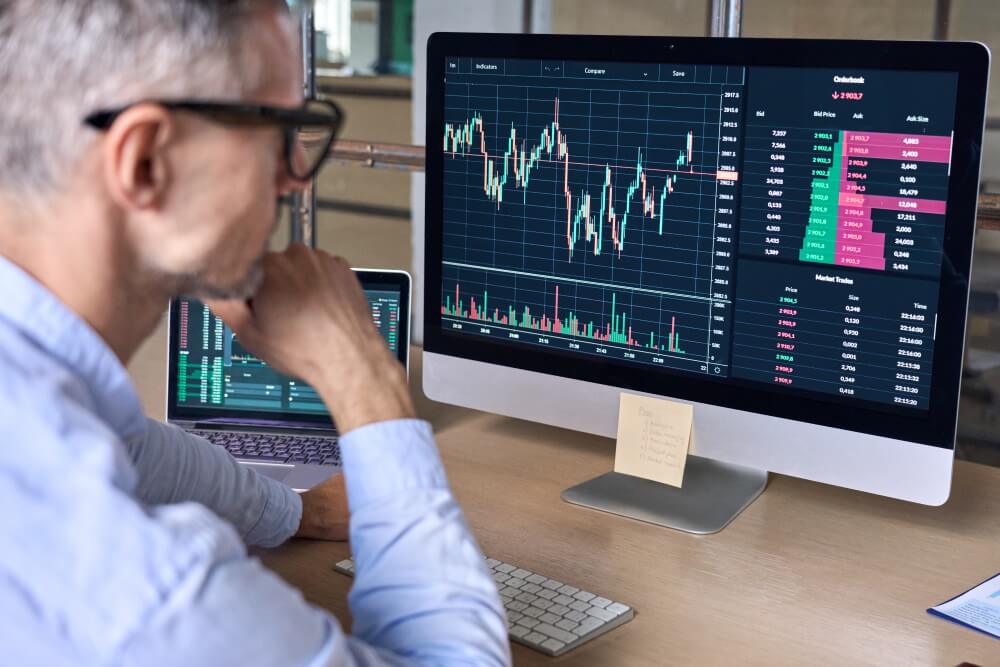
Choosing your trading timeframe is like setting the pace for your daily routine. Short intervals, such as 1- or 5-minute charts, offer more opportunities but can be stressful. If you can only trade during certain hours, opt for longer timeframes, such as 15-minute or 30-minute intervals.
Your choice of asset class should match your expertise and availability. Consider stocks, forex, indices, or commodities. Look for markets with good liquidity, tight spreads, and enough intraday volatility to create tradable opportunities.
Understanding the current state of the market—whether it's trending, ranging, or volatile—is key. Utilize technical tools such as moving averages, trendlines, or swing highs and lows to gauge the direction. Your strategy should be adaptable; for example, you might use breakout methods in trends and mean reversion in ranges.
Manage your risk by defining how much capital you're willing to risk per trade and where you will place your stop losses. Use position sizing to ensure that one loss doesn't significantly damage your account, and use leverage cautiously.
Your strategy must clearly define when to enter a trade. Look for breakouts, indicator signals, price patterns, or volume changes. Utilize multiple confirmations to enhance trade quality, such as combining momentum indicators with chart patterns or volume surges.
Decide how and when you'll close your trades. Options include setting fixed targets, using trailing stops, or scaling out of positions as profits grow. It's equally important to have a predefined stop loss for every position to prevent large drawdowns.
Write down every rule of your strategy—timeframe, market, indicators, entry/exit criteria, and risk limits. Backtest your approach using historical data to assess its performance under various conditions. Then, run it in a demo account or paper trade to confirm its practicality before going live. Maintain a detailed trade journal, recording entries, exits, reasons, and results. Review patterns to find what consistently works and what needs improvement.
AquaFunded offers a funded trading program that lets you turn your trading skills into substantial profits without risking your own capital. Access accounts up to $400K with flexible trading conditions, join over 42,000 traders worldwide, and start trading today with instant funding options.

Boost your day trading game with AquaFunded, where you can leverage your skills without the risk of losing your own money. Gain access to accounts up to $400,000, with lenient trading conditions—no time constraints, achievable profit goals, and up to 100% profit sharing. Over 42,000 traders globally have earned more than $2.9 million in rewards, all backed by a 48-hour payment guarantee. Dive right in with instant funding, or showcase your prowess through tailored challenge paths and keep every penny you earn.
Stay sharp by keeping up with the latest financial news. This includes interest rate decisions by the Federal Reserve, key economic indicators, and other financial updates that significantly impact market movements. Map out a list of stocks you're interested in, and get to know these companies inside out. Bookmark credible news sources, and stay informed.
Decide upfront how much capital you’re willing to risk on each trade. Many seasoned day traders risk between 1% and 2% of their accounts per trade. If you have $40,000 to trade, and you’re comfortable with a 0.5% risk per trade, your potential loss is capped at $200. Only trade with reputable brokers and platforms. Set funds aside that you’re prepared to lose.
Day trading demands your full attention and time. It’s not for those with a tight schedule. You need to be on your toes, ready to pounce on opportunities as they arise throughout the trading day. Be prepared to react swiftly.
If you’re new to day trading, stick with one or two stocks per session. It’s easier to track and find opportunities with fewer stocks. You can also trade fractional shares, allowing you to invest in small amounts. For example, if Amazon shares cost $170, many brokers let you buy a piece of it for as little as $5.
Penny stocks might seem like a deal, but they’re often illiquid, and the odds of striking it rich are slim. Stocks trading under $5 usually get delisted from major exchanges. Unless you’ve done thorough research, avoid these. Finding undervalued stocks takes effort.
The market is most volatile when it opens as traders rush to execute orders. Experienced traders can spot and capitalize on these patterns. If you’re a beginner, it’s better to observe without acting for the first 15 to 20 minutes. The action slows down mid-day and picks up again before the market closes. Timing matters, but as a newcomer, steer clear of the rush hours initially.
Decide in advance how you’ll enter and exit trades. Will you use market orders or limit orders? Market orders get you in or out fast, but don’t guarantee a price. Limit orders, on the other hand, secure a price but not always the execution. They enable precise trading and can minimize losses during market reversals. If the market doesn’t hit your price, though, you may not get filled.
Your strategy doesn’t have to win all the time to be successful. Traders can succeed by profiting on just 50% to 60% of their trades if their wins outweigh their losses. Keep the risk on each trade limited to a specific percentage of your account, with clear entry and exit strategies.
Frequent reflection on your trading actions is crucial. It helps you spot patterns, learn from mistakes, and tweak your strategies. This encourages continuous learning and adaptation to changing market conditions. It also fosters discipline and emotional control, both of which are key to trading success.
Successful traders don’t need to think fast—they’ve already developed a strategy and have the discipline to stick to it. The key is to follow your method closely, rather than chasing profits. Keep your emotions in check and stay on track with your plan. Remember the mantra: plan your trade and trade your plan.
If you’re looking to skyrocket your day trading game without risking your own capital, AquaFunded has your back. They provide access to accounts up to $400K with some of the most flexible trading conditions in the industry. Say goodbye to stressful time limits and hello to easy-to-achieve profit targets. You can even enjoy up to a 100% profit split. AquaFunded is a game-changer for traders who want to retain their earnings. Consider honing your skills and reaping the rewards without risking your own money. Now that's trading freedom.
AquaFunded isn't just a platform; it's a community. Over 42,000 traders worldwide have already collected more than $2.9 million in rewards. This thriving network provides a sense of camaraderie and support. When you join AquaFunded, you’re not just getting access to capital; you’re joining a movement. And with their 48-hour payment guarantee, you can rest easy knowing your hard-earned profits are just a click away.
Whether you’re a seasoned professional or just starting, AquaFunded offers multiple paths to success. You can start trading today with instant funding options or prove your skills through their customizable challenge paths. These challenges are designed to test your skills and help you grow as a trader. And with AquaFunded, you keep up to 100% of your earnings. That means more money in your pocket and more opportunities to build your trading empire.
AquaFunded offers some of the most flexible trading conditions in the industry. That means you can trade your way, without the constraints that other platforms impose. You can choose from a variety of trading strategies and techniques, and you’ll have access to the tools and resources you need to succeed. Whether you prefer scalping, swing trading, or something in between, AquaFunded has you covered.
One of the most significant advantages of trading with AquaFunded is its generous profit split. You can enjoy up to a 100% profit split, which means you keep more of what you earn. And with their 48-hour payment guarantee, you’ll never have to wait long to access your profits. This flexible profit-sharing model is just one of the many ways AquaFunded prioritizes your success as a trader.
